The web site for eastern Solent boat fishing

Author: Neville Merritt (Page 12 of 44)

Owner of www.boat-angling.co.uk and
www.arfordbooks.co.uk
Author of "Angling Boats"
Director of Pure Potential Development Ltd www.pure-potential.co.uk

Mackerel Brunch

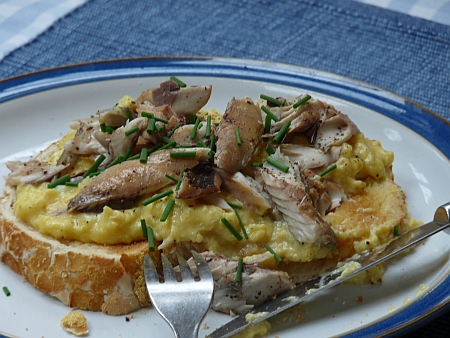
Smart eating places serve scrambled eggs with smoked salmon for breakfast or a light lunch, so I thought why not go along with that with a Solent version?  It works best with highly smoked and well seasoned mackerel, so it is woody flavoured and not too limp and fishy. This may be a bit much to take first thing in the morning but for a Sunday brunch it is very good.

For each serving (and you can do this just for yourself) you will need:

  • A couple of fillets of the best hot-smoked mackerel
  • Two fresh eggs
  • Butter
  • Salt and pepper
  • Splash of milk
  • Slice of really good bread
  • Pinch of fresh chopped chives or parsley

This is too easy. Toast your bread, meanwhile make scrambled eggs. (if you are new to this – melt butter in a pan. Beat eggs, a splash of milk and a pinch of salt and pepper in a bowl. Pour the mix into the pan, and stir very gently with a flat spatula to move the set egg off the bottom of the pan to make room for the runny stuff. In a minute or two it will be looking scrambled. While it is still a bit runny, take it off the heat – it will carry on cooking by itself and you want it sloppy, not set rock hard).

Butter your toasted toast, top with the eggs, and pile flaked, boned, de-skinned mackerel on top. Sprinkle with herbs and voila, your brunch.

Mackerel “Blackened Fish”

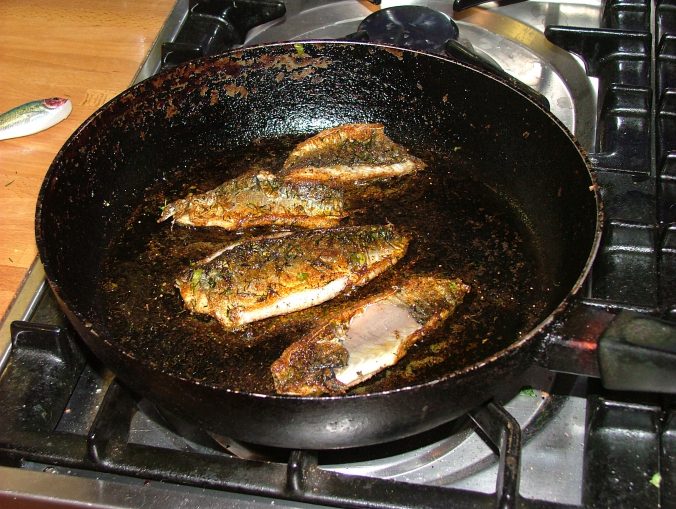
This recipe is perfect for those that like a spicy dish but don’t necessarily like the taste of mackerel. Blackened Fish is a Cajun style of cooking where fish fillets are rolled in spices then fried briefly in a searingly hot frying pan. This makes the outside crispy and the inside stays succulent.

Takes 10 minutes, serves 2. You need:

  • 2 large mackerel or 4 small, filleted and dried on a paper towel
  • Seasoning:
    • 1 teaspoon paprika
    • half teaspoon salt
    • half teaspoon garlic powder or fine granules
    • half teaspoon onion powder
    • half teaspoon white pepper
    • half teaspoon black pepper
    • 1 tablespoon chopped fresh dill
    • 1 tablespoon chopped fresh marjoram
    • 50gm clarified butter or ghee

The fish will be fried in hot butter, but at a high temperature ordinary butter burns and goes black and nasty. Clarified butter can be made – you just melt butter and pour off the clear part to use, and throw away the white bits. Or you can buy it readymade in the form of ghee in the ethnic food section of a large supermarkets, or much cheaper in asian food shops. It keeps for ages in the fridge and can be used for any frying job, particularly when making curries.

It really is this simple. Heat the ghee in a frying pan until it smokes. Mix the spices and spread out on a plate. Coat the fillets in the the spice mix on both sides. Put them in the frying pan, then after a minute or so, turn over and fry the other side. If the side you turned up is brown and crispy looking, a minute was fine. If not, give it a bit longer. Turn over and repeat.

That’s all! Serve with whatever you like, I like new potatoes and french beans, but rice and sweet corn would be ethnic, or potato wedges. Drink plenty of cold beer with this and listen to some good Southern music, and wonder why you hadn’t eaten mackerel this way before.

(Adapted from Linda Doesner)

Kedgeree

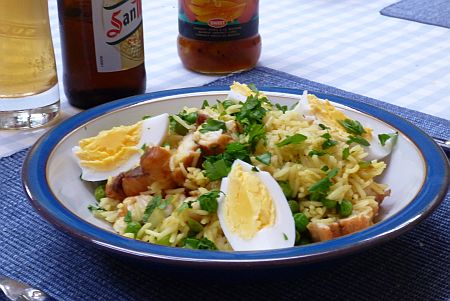
A classic dish, usually made with smoked haddock, but you can make it with any smoked white fish. When you next hot smoke some mackerel, try smoking pout, pollack or huss (dogfish or smoothhound) as well, just for this dish. Here is one I made with smoked smoothhound.

There are many similar variations but this is one I like best. For four people you will need:

  • 450-600g smoked white fish
  • 85g butter
  • 1 tbs olive oil
  • 1 onion, chopped
  • 1 tbs mild curry paste such as korma
  • 150g frozen peas
  • 225g basmati rice
  • 500ml fish stock (from a cube is fine)
  • 3 hard boiled eggs, still warm
  • 2 tbs chopped fresh parsley.
  • salt and pepper

If it is your own smoked fish, it will already be cooked. If you are using bought smoked haddock (shame) you will need to boil up the stock and pour it over the fish and leave for five minutes. Meanwhile, fry the onion gently in the melted butter and oil until slightly coloured. Stir in the curry paste, heat through for a minute, then stir in the rice. Now add exactly 500ml fish stock, either what you used to soak the fish, or made up from the cube. Bring to a simmer, then turn the heat low and cover for ten minutes. Then add the peas and fish broken into bite size pieces, cover again and cook on for another five minutes. By now the rice should have absorbed all the liquid. You can leave covered for a bit longer if it is still a bit runny. It should be neither dry nor sloppy but moist.

Serve in four bowls, with the quartered eggs and sprinkled with chopped parsley. Nice with mango chutney, and a nice cold beer of course.

Gravad Max – River Cottage-Style

This is unashamedly borrowed from Hugh Fearnley Whittingstall’s superb book The River Cottage Cookbook and is a great way of serving mackerel on a different way – cured, rather than cooked.

You will need some home-made equipment: a two litre (or larger) ice-cream carton or similar sized old Tupperware box. and a piece of clean wood cut so it fits snugly inside it. Drill a few small holes (5mm) in the bottom of the box for drainage.

For a batch of 10 fresh mackerel you will need:

  • 100gm caster sugar
  • 75gm salt, preferably coarse
  • 15gm ground black or white pepper
  • Handful of fresh dill, stalks remove, fronds chopped

Fillet your mackerel and remove as many bones as possible. Mix the cure ingredients above. Now sprinkle some of the cure in the bottom of the box. Place fillets skin side down in a single layer on the box, and sprinkle more cure over. Place the next layer of fillets skin side up, sprinkle more cure over. Then a layer skin side down, and repeat until your fillets and cure are used up. Put your wood on the top, put the box on a plastic tray or china plate (not metal) and put a weight on top of the wood. A couple of tins of beans will do. You might want to put the tins in a plastic bag so they don’t touch the cure and go nasty. Put the whole assembly in the fridge. Twice a day, take the liquid that has oozed onto the plate and pour it back over the fillets. After three days your Gravad Max is perfect (actually you can start eating after a day but three is better).

To eat, slice the now very firm and juicy fillets into thick slices at an angle, you can cunningly slice the flesh off the skin as you go. Serve these as a starter or part of a smorgasbord lunch with brown bread and a sauce like this one:

  • 4 teaspoons English mustard
  • 4 teaspoons brown sugar
  • 2 teaspoons white wine vinegar
  • 6 tablespoons creme fraiche
  • 2 to 4 tablespoons chopped dill

Mix the first three ingredients until the sugar has dissolved, mix in the creme fraiche, then the dill. Simple, and goes with it perfectly.

Fritto Misto Di Mare

Or Italian for “what on earth can I do with only one plaice and some leftover bait?” Obviously this traditional recipe was invented by Mediterranean anglers long ago who came home with a load of odds and ends, just  like us on a less than average day. Quantities are highly variable depending on what is available, but to give you a guide, the following fed two comfortably: one plaice of about a pound, 6 squid, 12 small frozen scallops, 8 raw frozen prawns.

For four (or more, or less, depending on how much fish you have) you will need:

  • white fish, filleted, skinned and cut into bite sized slices (plaice, whiting, bream, pouting, pollack etc)
  • squid (you did keep some?)
  • raw prawns, thawed if frozen
  • mussels, scallops
  • a handful of plain flour
  • a teaspoon of salt
  • lemons
  • oil for deep frying
  • Kitchen paper towels

Heat the oil in a deep pan until a cube of bread goes brown in 20 seconds. Mix the salt and flour together. Dry the fish etc. on the paper towels, because hot oil and wet fish creates an interesting eruption and you don’t want that unless you are tired of your old kitchen. Toss the fishy bits in the seasoned flour.

Drop the floured pieces in the oil, a handful at a time, don’t crowd the pan. They will cook very quickly as they are so small, probably 30 seconds only. Scoop them out when turning brown at the edges and drain them on more kitchen towels. Keep them warm in the oven while you do the next batch. And so on. That’s all there is to it.

Serve with lemon squeezed over and more salt. Ours made a meal with a side salad and lots of good fresh crusty bread, washed down with a Peroni if you are cheap like me or a very cold bottle of Italian white if you are not.


Five Thousand Fish

Have you ever wondered how to serve a fish meal to a hungry family when you only have one or two? Jesus managed to feed five thousand followers by the Sea of Galilee with two fish and five buns, but He used miracles. This is a recipe that does not involve cheating. It doesn’t exactly feed people either, but it makes a nice starter and leaves them happy. Use plaice, dabs, flounder, small pollack, bass, whiting, cod or similar.

Make an Indian batter by measuring about 50g of gram (chickpea) flour, which you can buy in the better supermarkets these days. Add a teaspoon of salt and a teaspoon of garam masala. Mix with enough cold water to make a batter the consistency of thick cream. Heat a pan of oil to frying temperature, which you can measure by dropping a small cube of bread in and if it goes nicely brown in 30 seconds its fine. The oil only needs to be a couple of cms deep.

Take your fish, skin and fillet it and cut into strips. Coat in the batter mix and drop in the hot oil one by one. Don’t over-do the quantity as they will stick together and cool the oil. Take them out when golden, and drain on kitchen paper. Wait a minute for the oil to get hot again then repeat the performance until you have a basket of Indian fish strips in a spicy batter. Serve with a scattering of chopped coriander leaf for a posh touch, and a bowl of mango chutney to dip. Scrummy. If you have made too much batter, you can make vegetable fritters and onion bhagees – its the same batter. (My own recipe)

Fish Tacos

A great way of using any firm white fish, especially if you have odds and ends which is fairly typical of my fishing. I rarely come home with anything capable of producing four large neat fillets which is what many recipes call for. You can vary the heat with this, from simple herby-citrus to a nice tingle. The ingredients list looks a lot but the recipe is very simple. If you make up the fish marinade, guacamole and cream sauce ahead of time you could easily make this in the boat with the freshest fish imaginable.

For each serving (and you can multiply this from one to thousands) you will need:

  • Skinned, boned white fish, any amount but about 180g is a typical portion
  • Soft flour wraps
  • Fresh coriander
  • garlic
  • 1/2 avocado
  • 2-3 cherry tomatoes
  • 1 lime
  • Lettuce leaves (any)
  • 1/4 red onion (optional)
  • Olive oil
  • Sour cream or creme fraiche
  • Mayonnaise
  • Hot chilli sauce (any – preferably Mexican style)

Quick and simple.

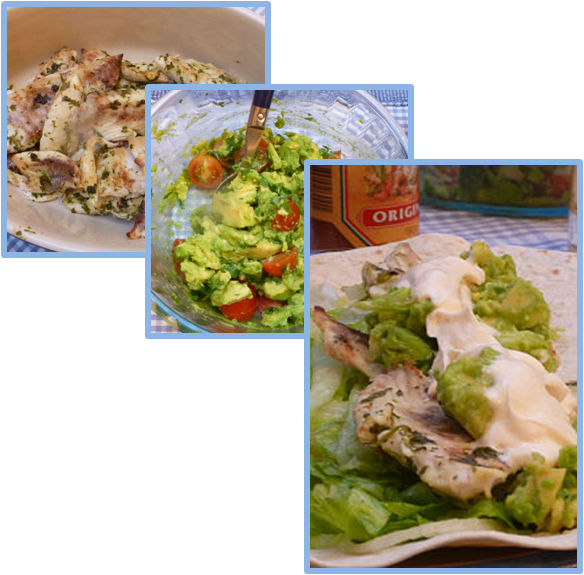
Follow these quantities for one or multiply up for several. Juice the lime, chop the coriander and mix 2 tablespoons chopped coriander, half a clove of crushed garlic, half the lime juice, a tablespoon olive oil and pinch of salt. Put this marinade in a bowl and mix in the fish. Leave alone for about 15 minutes.

Meanwhile mash up the avocado, another tablespoon of chopped fresh coriander, the other half of the lime juice, chopped red onion, quartered cherry tomatoes and a pinch of salt. It can be as smooth or lumpy as you like. Yes, you have just made guacamole.

Now make the cream sauce. Mix mayo and sour cream in proportion one third/two thirds, add in crushed garlic and hot sauce. Quantities and proportions to your taste!  Two tablespoons of the resulting sauce per wrap is a good guide.

Now go back to the fish. You can either fry on a hot griddle pan or grill, either way cook until white all the way through, a few minutes only.

Now assemble: on your wrap put a bed of salad leaves. Shredded iceberg lettuce is fine or you can go fancier. Then a layer of guacamole, then the fish, then a good blobbing of the spicy cream sauce. Either roll up and eat messily with your fingers or eat daintily with a knife and fork. If you have under-done the hot sauce you can always lash on more. Very cold Mexican beer is the perfect accompaniment.

(Inspired my many recipes but particularly The Londoner blog)

Fish chowder to impress

Takes 35 minutes plus chopping, serves 4-6. You need:

  • 350g white fish fillet (pollack, whiting, cod etc.) cut into chunks. Even better with a little bit of smoked fish too.
  • 45g butter
  • Dash olive oil
  • 1 onion chopped
  • 2 celery sticks, sliced
  • 4 rashers bacon, sliced
  • 2 carrots, sliced
  • 1 potato, cut into cubes
  • 1 bay leaf
  • Sprig of thyme
  • 2 heaped tablespoons plain flour
  • 1/4 teaspoon turmeric
  • 900ml milk
  • Lemon juice
  • 110g frozen peas, thawed
  • Salt and pepper

Gently fry the onion, celery, carrot, bacon and potato for five minutes in the oil and butter. Add the thyme and bay leaf, cover and let it sweat for a further five minutes. Sprinkle with flour and turmeric, stir for 30 seconds then add the milk. Heat and keep stirring, until it simmers. Add salt and pepper. Simmer for 15-20 minutes – if it gets too thick, add a bit more milk. Drop in the fish and peas, and cook for five minutes after it has come back to the simmer. Add lemon juice, adjust seasoning and serve. This is nice with crusty bread, and a sprinkle of nutmeg and grated cheese on top. (Thank you William Black, his recipe in Fish )

Eat Your Bait…or Salt and Pepper Squid

Often on the menu in a Chinese restaurant, this is easy to make. First obtain your squid. This could be fresh caught, shop-bought, or if you have kept your squid bait cool and clean you could cook up any leftovers as soon as you get home (seriously – I do). Most squid sold for bait is the same as boxes of squid sold to restaurants. Go to a Wing Yip cash and carry, you will see what I mean. The amount of squid you have will determine whether you are about to make an appetizer, snack or meal.

You need:

  • Squid
  • 4 tablespoons plain flour
  • 4 tablespoons cornflour
  • 1 tablespoon Szechuan peppercorns (or normal black ones if you don’t have any)
  • 1 tablespoon sea salt
  • 1 teaspoon chilli flakes
  • Oil for deep frying
  • Lemons to serve

Prepare your squid by pulling off the head, cutting off the tentacles in a bunch just under the eyes (discard the eyes and guts), slit open the tube and scrape both sides clean with a knife. Cut into 2cm squares, rinse and pat dry on kitchen paper.

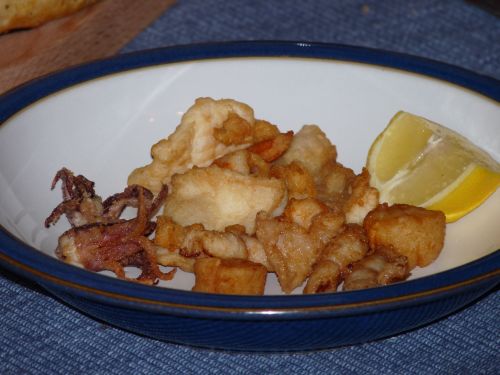
Grind up the salt, pepper and chilli in a pestle and mortar. If you want a slightly less authentic version just use half the quantity of ground black pepper, table salt and a good pinch of chilli powder. Mix in with the flours. Put a 2cm depth of oil in a pan and heat until a cube of bread turns brown in 30 seconds. Toss a small handful of sqiddy bits in the flour to coat, shake off any excess and drop in to the oil for one to two minutes, don’t overdo it. Light brown is fine. Scoop out with a slotted spoon and drain on kitchen paper. Give the oil time to reheat and repeat the process until the squid is used up. Nice served as a snack with lemon juice squeezed over, and speared with a cocktail stick. I like extra salt too. It may not be a great idea to tell your posh guests where the squid was earlier. (Good Food recipe)

P.S. Alternatively make a beer batter by pouring lager onto a handful of flour until it is the consistency of double cream, then dip your prepared squid into it before frying as above. It makes the lightest, crispiest batter!

Dogfish Recipes

  1. Dogfish done like Osso Bucco
  2. Dogfish Deep Fried in Beer Batter
  3. Dog-Burgers
  4. Husspi

Dogfish 1 – Dogfish done like Osso Bucco

Which if you eat Italian you will know is a way of cooking veal. This is similar but with dogfish (huss, rock salmon, whatever).

You will need:

  • 4 fillets (two dogfish halved), shopped into 4cm lengths.
  • 3 garlic gloves chopped
  • A handful of fresh parsley leaves, chopped
  • Olive oil
  • 1 shallot or half a small onion chopped
  • 4 tomatoes chopped
  • 1 tablespoon tomato paste
  • 1 glass of white wine
  • Grated zest of a lemon
  • Salt and pepper

You will need a casserole dish that can go on the hob and in the oven. Put a glug of olive oil in the bottom and gently sweat the shallot/onion. Add the tomatoes and tomato paste. Cook a couple of minutes. Add the wine, Cook a couple of minutes more after it has boiled. Add half the parsley and garlic. Stand the dogfish sections upright in the casserole in a little group. Put in the oven and cook at 170degC or 325degF for 30 minutes. Check it after 20, if it is drying up, add half a glass of water. When the fish are done, put fillets on each plate and keep them warm. Put the casserole back on the hob to heat, add the lemon zest, the rest of the garlic and parsley, season with salt and pepper and give it a quick bubble – again, make sure it doesn’t dry out. Spoon over the fish and serve.

(From a Mitch Tonks recipe)

Dogfish 2 – Deep Fried in Beer Batter

This is the best way to cook dogfish and only if you tire of it should you try the next one! As with all dogfish recipes, skin them and freeze the fillets for a couple of weeks, this eliminates any taint of the ammonia which affects all cartilaginous species.

You will need:

  • A can or bottle of lager-style beer (or half beer half water)
  • Plain flour
  • Salt
  • Oil for deep frying
  • Dogfish fillets

I am not giving any quantities because it all depends how many you have. The method is simple. Put the beer and flour in a bowl and stir together, you need a batter the consistency of pouring cream (OK if you want quantities, 8 tablespoons of flour to 250ml of beer is a good start). Add a bit of salt. Heat your oil until a cube of bread turns brown and crispy in about 20 seconds. Then dust your dry fillets in some flour, then dip right into the batter mix to coat, then drop the coated fillet into the hot oil. Don’t crowd the oil, you don’t want it to cool. They are done when they look like the ones in a chip shop. Drain and blot excess oil in kitchen paper, and keep warm in an oven while you do any others. Superb with chips, lashings of salt and tomato ketchup.

Dogfish 3 – Dog-Burger

Fishburger

Or you could just call this “Huss Fish-cakes”. It doesn’t even need to be huss, any white fish will do, even a mixture. I made this recently with a dogfish, two skate “eyes” and a stray bass fillet!

You will need (for 4 generously):

  • Two small dogfish or equivalent (frozen then thawed)
  • Two medium potatoes
  • Splash of milk
  • Chopped parsley
  • Lemon juice
  • 1 beaten egg
  • Breadcrumbs or two slices of bread put in the blender
  • Oil for shallow frying

Dogfish are best filleted and frozen for at least two weeks. This extracts any remaining ammonia taste and also removes some water. Whatever fish you end up using, skin and fillet the fish, and put in a bowl with a splash of milk and microwave for three minutes. Peel and boil the potatoes – use a ratio of twice as much fish to potato. Drain and mash the potatoes, and dry over a gentle heat. Drain and flake the fish, taking out any bones and skin remaining. Mix in with the potatoes and add lemon juice, parsley, salt and pepper. Mix into a mush. With your hands, press and shape into as many fish-burgers as looks right, it will depend in the amount of mush and individual greed. It helps to put them into the fridge to firm up and chill at this point, otherwise they may collapse at the next stage.

Pour oil into a large frying pan to a depth of about 5mm. Heat until a cube of bread browns up in about 30 seconds. Now the tricky bit. Dip each fish-burger into the beaten egg to coat, then into the breadcrumbs, pat to make them stick then lay in the oil. Quickly repeat until your pan is full. By the time the last one is in, the first will need turning over. Cook about three minutes each side, then remove and drain on kitchen paper. Nice served in a burger bun with mayo, or tartare sauce, and a salad. Don’t tell anyone it’s dogfish and they’ll never guess.

Dogfish 4 – Husspi

Husspi2

I like breaded scampi. I catch too many dogfish. Last weekend I caught dozens, all went back but one was deeply hooked so I tried an experiment. It worked, so I’ll share it here.

  • Take one dogfish, skin and fillet it to remove the backbone. I always freeze dogfish for a week but some would say that is unnecessary. Anyway, I did.
  • Thaw the fillets and slice into scampi-sized pieces.
  • Beat an egg and put in a bowl. Put to one side.
  • Make a mug of breadcrumbs by whizzing up a few slices in a blender.
  • Mix in a teaspoon of garlic salt, a fierce grinding of black pepper and a violent shake of cayenne pepper. Forgot to mention, if you have some parsley, add a small handful to the breadcrumbing process and whiz that in too.
  • Pour some cooking oil into a pan to a depth of 2cm and heat to 190C (or when a cube of bread goes brown in 30 seconds)
  • Dip your fake scampi in the egg then in the breadcrumb mix then drop in the hot oil.
  • After a minute flip them over. After another minute they should be brown and crispy.
  • Remove and drain on some kitchen paper.

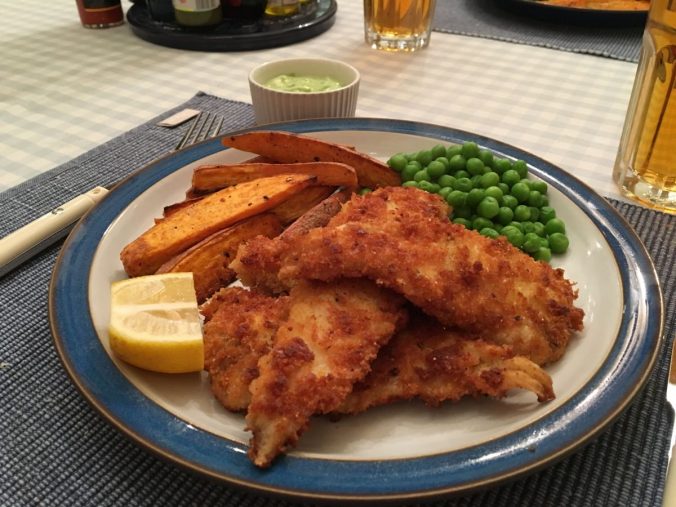
They should look like this and taste extremely good, with or without embellishment of tartar sauce or lemon juice.

« Older posts Newer posts »

© 2026 Boat Angling

Theme by Anders NorénUp ↑