The web site for eastern Solent boat fishing

Author: Neville Merritt (Page 24 of 44)

Owner of www.boat-angling.co.uk and
www.arfordbooks.co.uk
Author of "Angling Boats"
Director of Pure Potential Development Ltd www.pure-potential.co.uk

Langstone Catch Report September

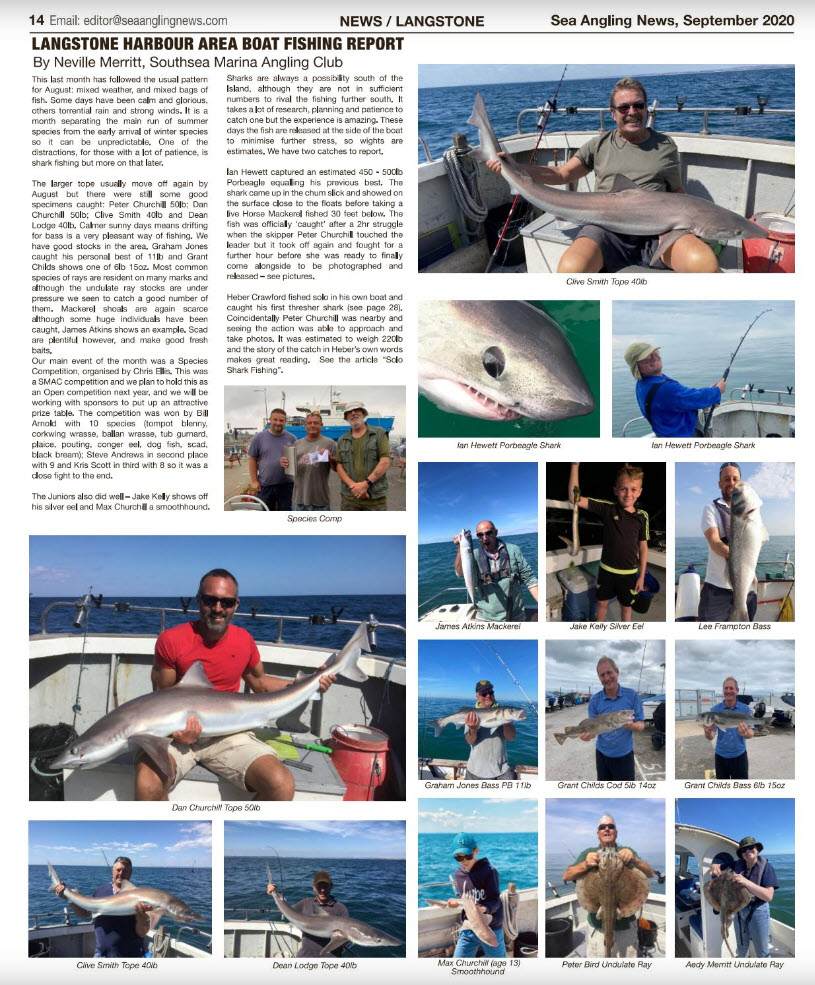
This last month has followed the usual pattern for August: mixed weather, and mixed bags of fish. Some days have been calm and glorious, others torrential rain and strong winds. It is a month separating the main run of summer species from the early arrival of winter species so it can be unpredictable. One of the distractions, for those with a lot of patience, is shark fishing but more on that later.

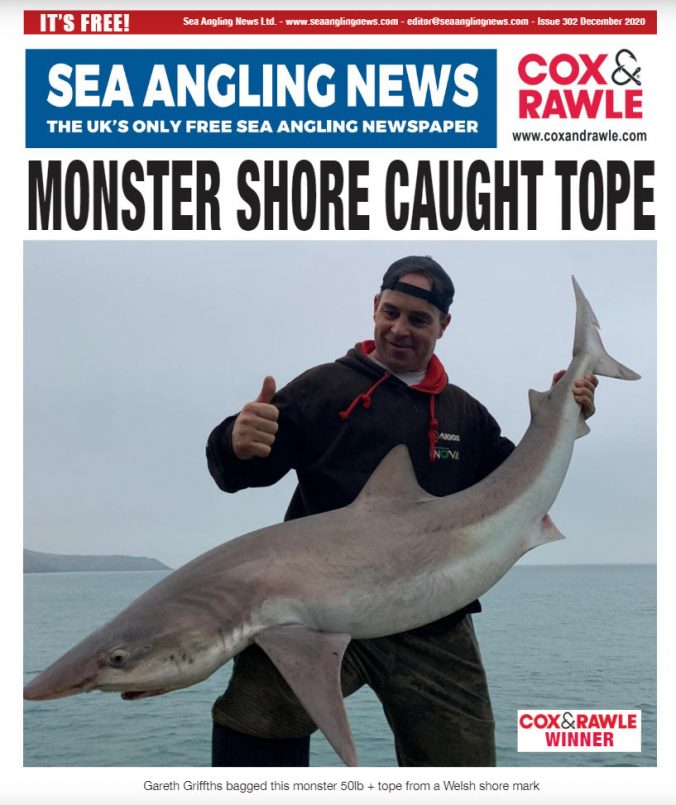
The larger tope usually move off again by August but there were still some good specimens caught: Peter Churchill 50lb; Dan Churchill 50lb; Clive Smith 40lb and Dean Lodge 40lb.

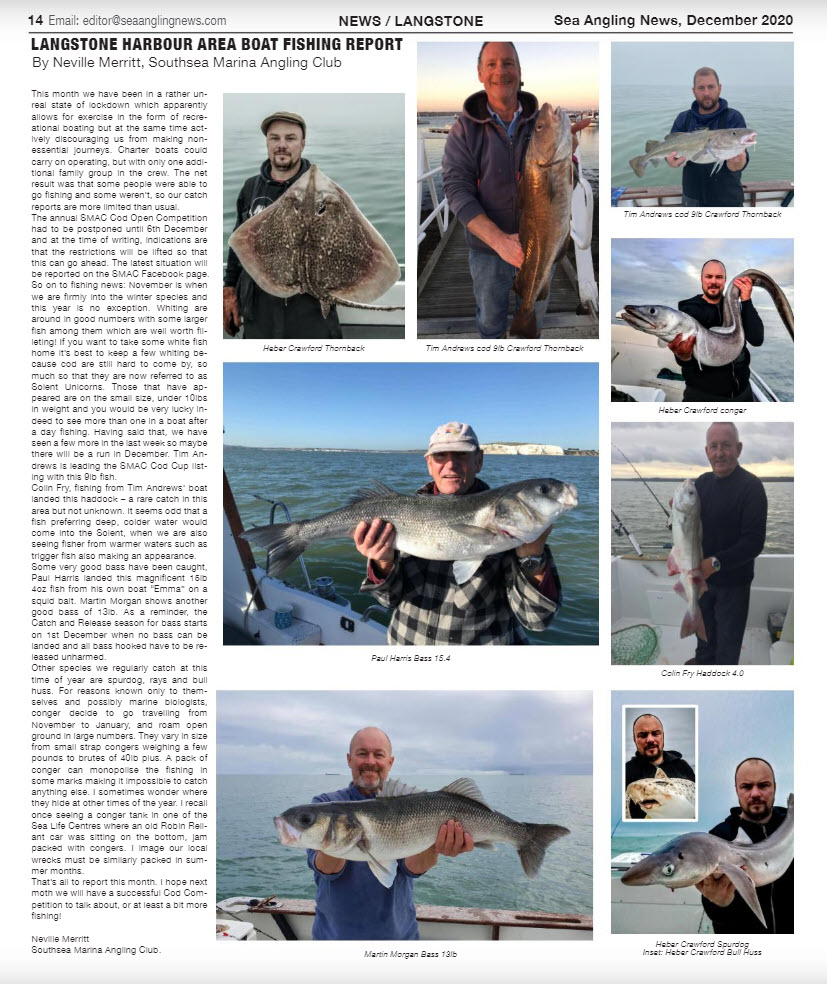
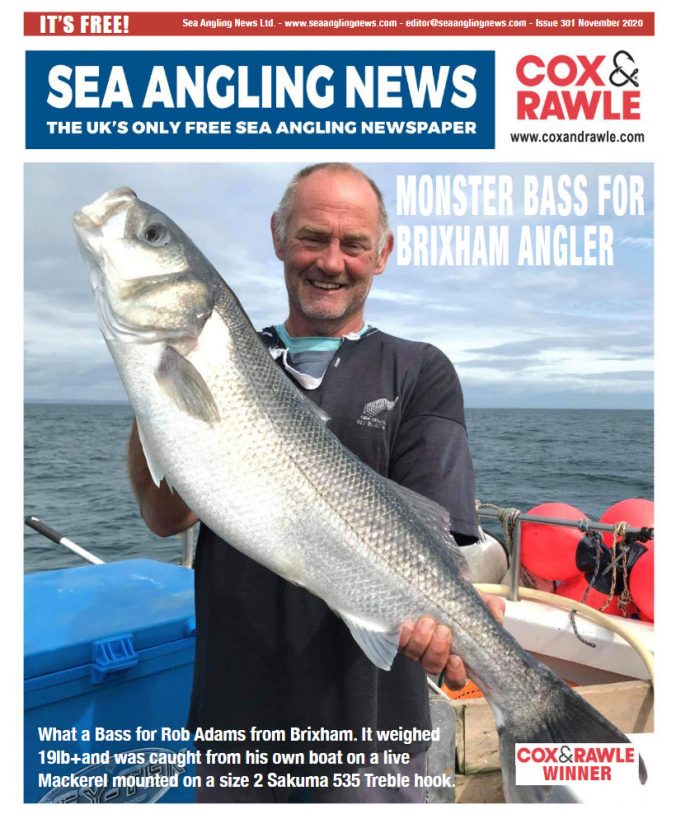
Calmer sunny days means drifting for bass is a very pleasant way of fishing. We have good stocks in the area. Graham Jones caught his personal best of 11lb and Grant Childs shows one of 6lb 15oz. Most common species of rays are resident on many marks and although the undulate ray stocks are under pressure we seen to catch a good number of them. Mackerel shoals are again scarce although some huge individuals have been caught, James Atkins shows an example. Scad are plentiful however, and make good fresh baits.

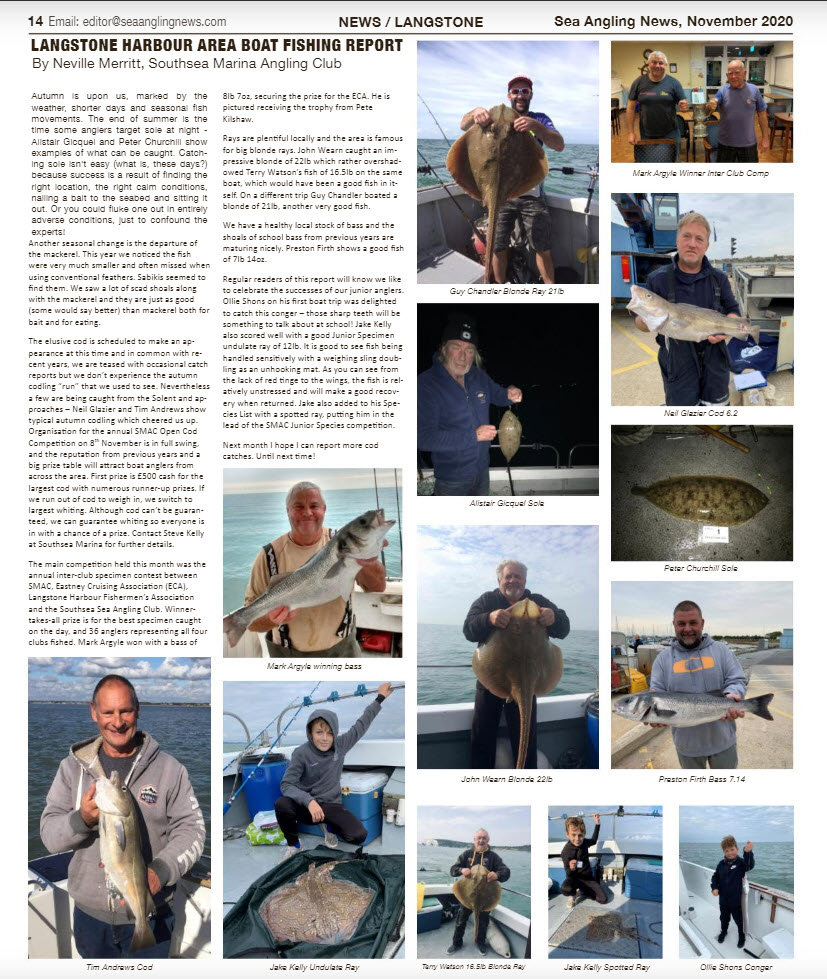
Our main event of the month was a Species Competition, organised by Chris Ellis. This was a SMAC competition and we plan to hold this as an Open competition next year, and we will be working with sponsors to put up an attractive prize table. The competition was won by Bill Arnold with 10 species (tompot blenny, corkwing wrasse, ballan wrasse, tub gurnard, plaice, pouting, conger eel, dog fish, scad, black bream); Steve Andrews in second place with 9 and Kris Scott in third with 8 so it was a close fight to the end.

The Juniors also did well – Jake Kelly shows off his silver eel and Max Churchill a smoothhound.

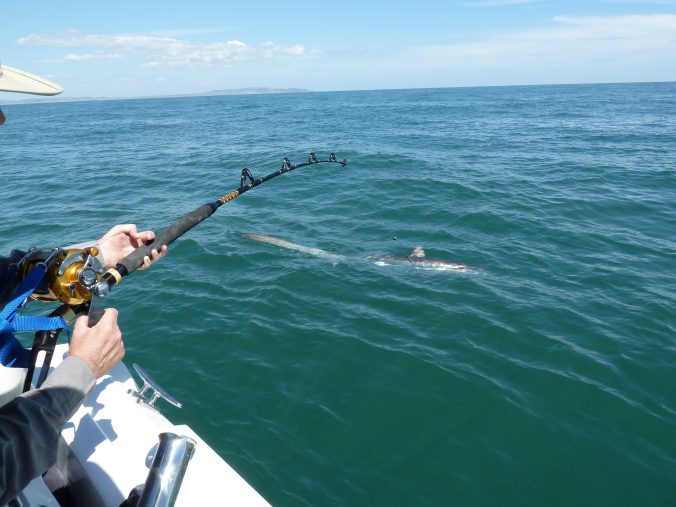
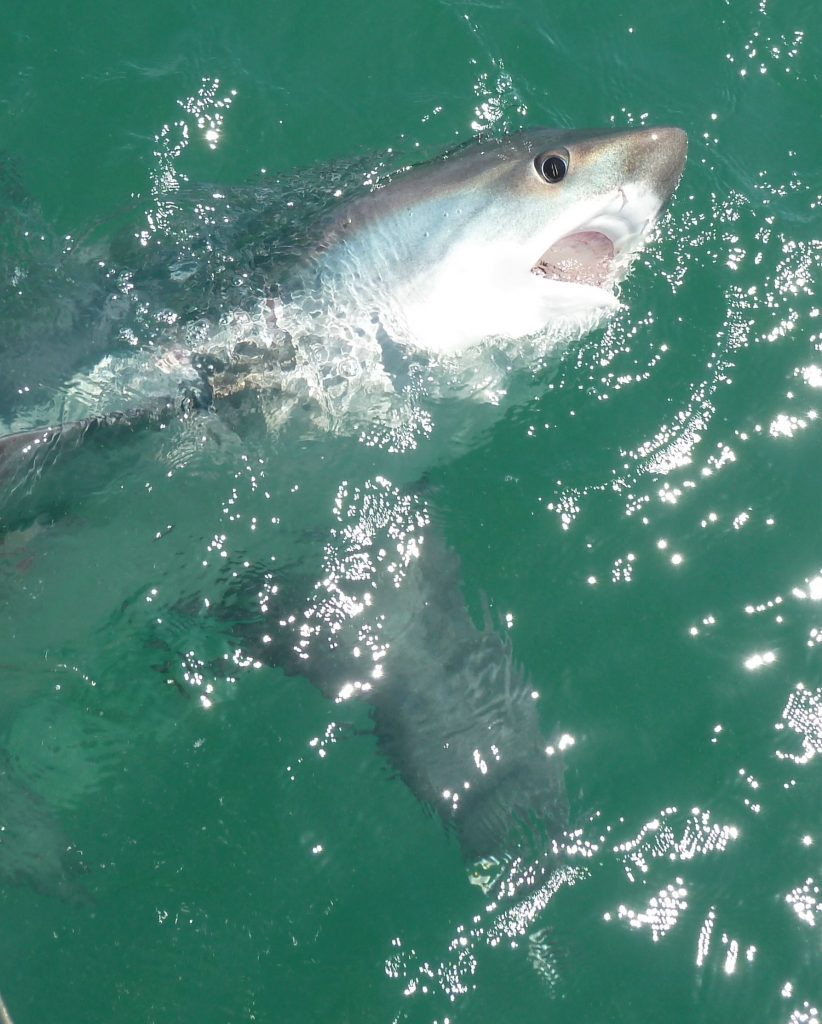
Sharks are always a possibility south of the Island, although they are not in sufficient numbers to rival the fishing further south. It takes a lot of research, planning and patience to catch one but the experience is amazing. These days the fish are released at the side of the boat to minimise further stress, so weights are estimates. We have two catches to report.

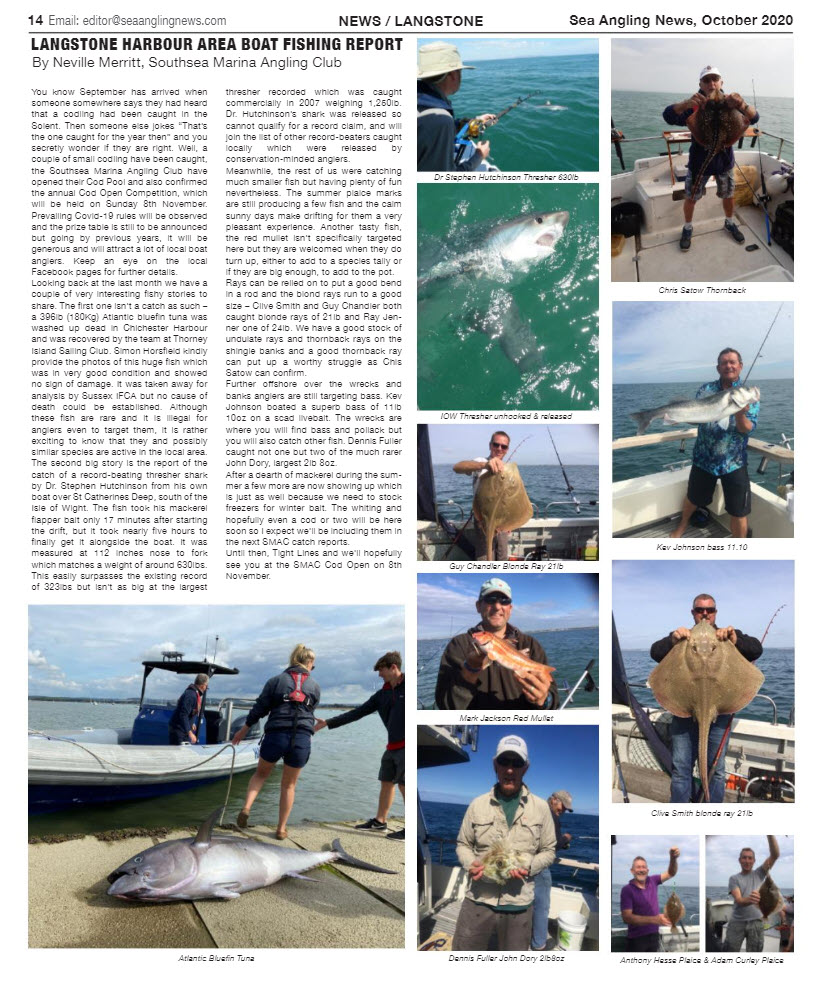
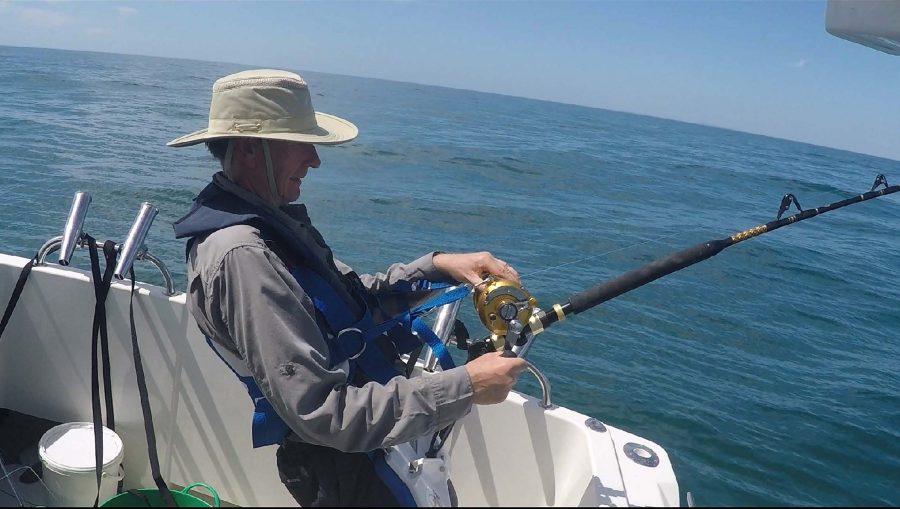
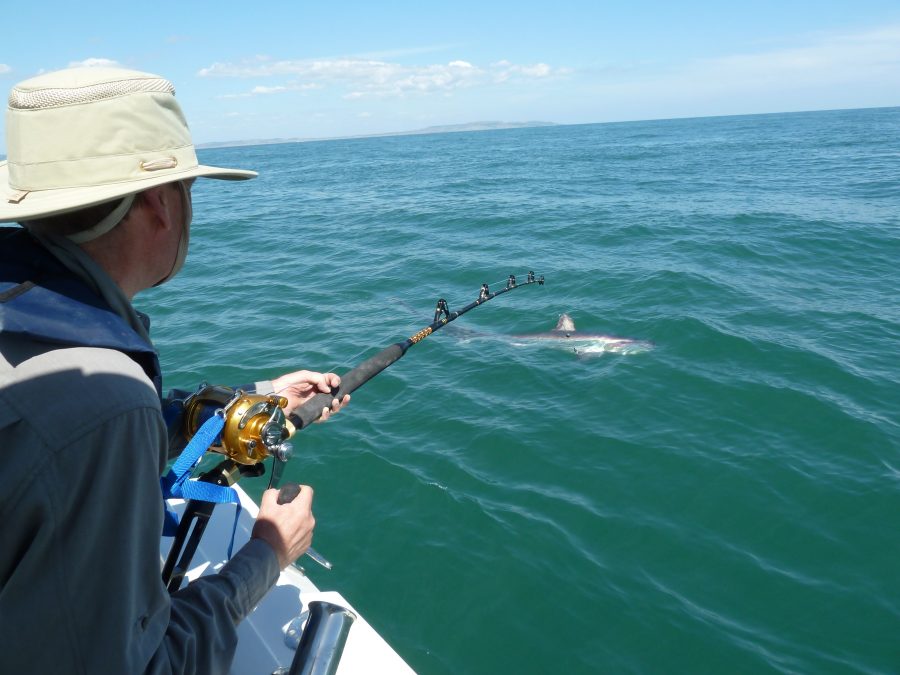
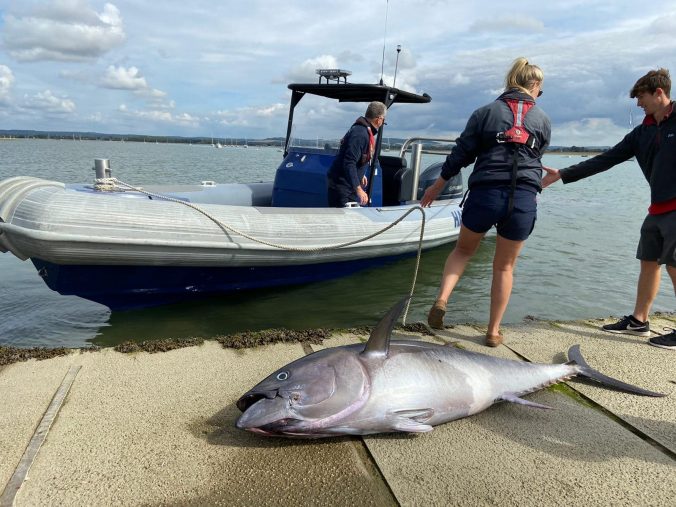
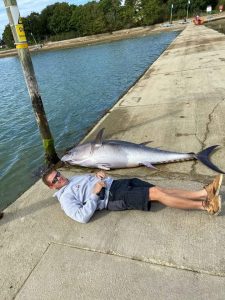
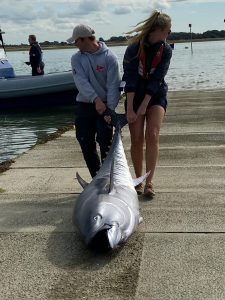
Ian Hewett captured an estimated 450 – 500lb Porbeagle equalling his previous best. The shark came up in the chum slick and showed on the surface close to the floats before taking a live Horse Mackerel fished 30 feet below. The fish was officially ‘caught’ after a 2hr struggle when the skipper Peter Churchill touched the leader but it took off again and fought for a further hour before she was ready to finally come alongside to be photographed and released – see pictures.

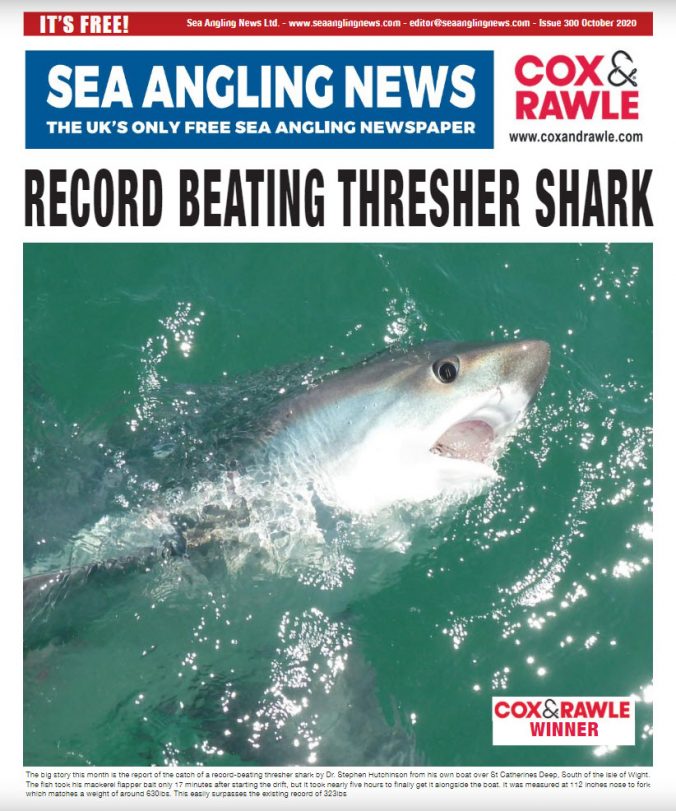
Heber Crawford fished solo in his own boat and caught his first thresher shark. Coincidentally Peter Churchill was nearby and seeing the action was able to approach and take photos. It was estimated to weigh 220lb and the story of the catch in Heber’s own words makes great reading. See the article “Solo Shark Fishing”.

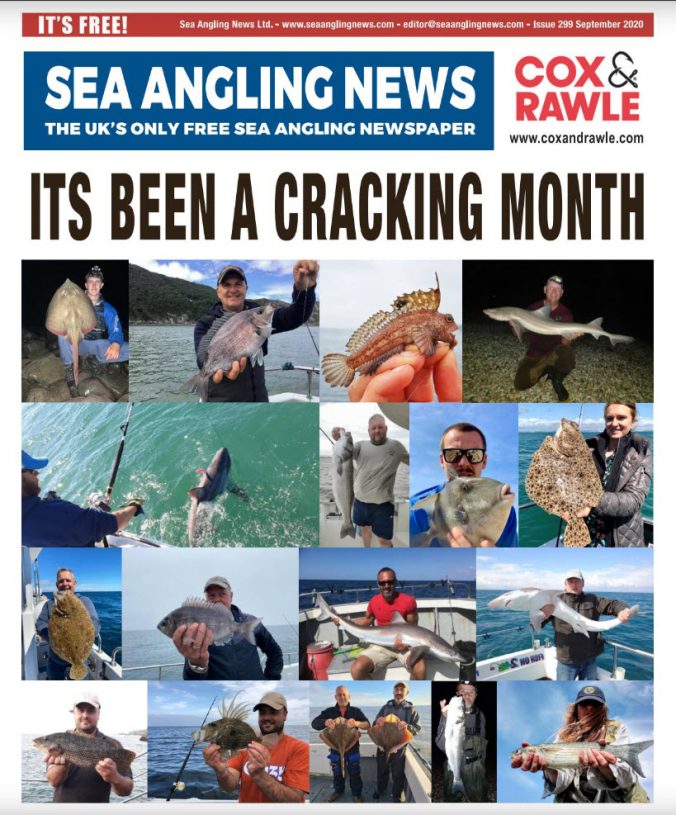
You can read the full Sea Angling News online here

Pannini Onboard

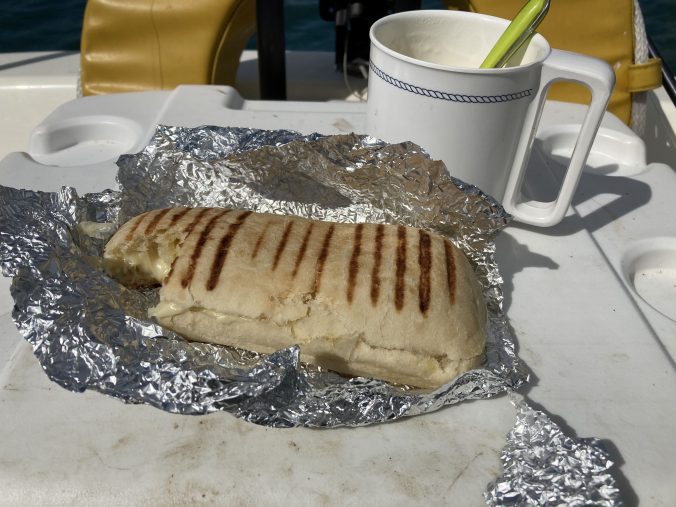
Do you ever fancy a toasted sandwich, pannini or stuffie on board but you only have a one-burner stove and a kettle? Here is a way of bringing joy to a cold fishing day. Firstly, make your pannini, sandwich or stuffie (stuffed bap or roll) using heatable ingredients and preferably with cheese to bind it all together. Ham, bacon, cooked mushrooms, cheese, tomato, onion, cooked chicken, pesto, cooked meatballs/leftover burgers, sundried tomatoes are all ingredients you can experiment with. Now individually wrap the pannini/sandwich/stuffie tightly in strong aluminium foil. Go fishing. When hunger strikes, fire up your gas ring and take out a dry fring pan. Place your foil parcels in the pan and put on the heat. Turn them every two minutes for six to eight minutes. Heat gently or  you could end up setting them on fire.  If your turning and heat application are right, when you open the parcel you will find a hot pannini oozing with melted filling. If not, wrap it up again and take another couple of turns. The secret is to heat low and slow enough that it melts through to the centre, and hot enough that the top and bottom are crispy.

Solo Shark Fishing

By Heber Crawford

I have never fished for big sharks before, but I have been researching the local sharks for over a year. I knew the waters around the Isle of Wight have a reputation of big sharks in years gone by so that’s where I began to look.

I set of from home at 8:00 am on 6th August with around 15 kg of home-made chum: a mix of bran, oats and oily fish mixed with fish oils that had been sitting for two days stewing. The trip didn’t start well because it was a real struggle to find bait, but after around four hours I had some nice fresh bait in the box. I set course for the famous St Catherine’s area I had read so much about. My drift started at around 2pm with one rod set to fish deep and one shallow.  I spent the day looking at my two floats with much anticipation. Before I knew it, darkness was setting in, I was a long way from home and on my own. I cooked myself some fresh mackerel and had a cup of tea just as the last of the light was fading. I started to slowly nod off to sleep in my chair.

Shark fishing

I woke around 20 minutes later and got up to top up the chum bags. I was shocked to see one was missing from the side of my boat! I was a little unsure what had happened, but 15 minutes later in the pitch black with the only light given to me by the moon my real screamed off. Absolute panic kicked in – I didn’t have time to put my deck light on, I grabbed my rod and held on for dear life as my 50lb class Abu Suveran was bent double. Line was flying from my real at an alarming rate. My heart was beating out of my chest and my legs had turned to jelly. I was alarmed at the amount of line coming from my reel but after what seemed like an age it stopped dead. My rod regained its normal shape and the reel was not singing any more. The fish had slipped the hook.

I have never felt power like that before I was in shock. I continued to fish on for a short while and when the chum ran out and my bait had gone, I headed home in the early hours of the morning. The ride home seemed to take forever. I arrived home in a state of disbelief at what had just happened. I laid in bed trying to sleep but sleep did not come to me. I was buzzing.

After trying for three hours to get some much-needed sleep I dragged myself back out of bed.  I raided my bait freezer for everything in there. I took a bucket-full of bran and the last of my fish oil to make some more chum. I was under-prepared but my mind was racing from the excitement from the night before. I grabbed some bottles of water from the fridge, the dinner my wife had made me the night before and made my way back to my boat in a complete daze.

My struggle for bait was even worse than the day before and it took hours to finally put two mackerel in my bucket. I made my way back to where I lost the fish the night before. With the boat on autopilot I set about smashing up everything I had brought from the freezer for my chum bag.

I got to my mark but I was feeling a little disheartened with my chum mix. The tide was starting to ease and my mind was all over the place. I had so much doubt in myself. I was extremely tired. My drift was slowing, I had probably drifted over a mile and had been fishing for a little over a hour. Sitting in my chair with my thoughts fixed on what had happened the night before, I heard “click, click, click” then nothing. “It’s the tide,” I said to myself. Then it happened again but faster this time. I stood up and 30 yards from my boat an absolute monster came flying out of the water almost completing a backflip. My first thought was that it was a huge dolphin and then my real screamed into life.

Shark fishing

I grabbed my rod, line flying from my reel. 70 yards away it jumped again, magnificently clearing the water. It continued to strip line and after another 100 yards it cleared the water for a third time. Absolute panic set in. I ran into my cabin with rod in hand – nearly snapping my rod on the way. I started my engine and flipped the engine into gear. All the time I’m hanging my rod out of the cabin door trying to hold onto an animal set on trying to make its way to France.

Then it happened again. My reel stopped singing, my rod straightened. It had gone. I stood in utter disbelief.

“No,” I said to myself. I reeled like crazy. Nothing. I reeled again as fast as I could. There was nothing there. 50 yards from the boat it jumped again, thrashing its head wildly. My line tightened, my rod bent double. It was on again! I locked my drag and line started to fly out. I continued to chase down the shark to get it within 30 or 40 yards from the boat then it would fly off again. All the time I’m in and out of my cabin steering the boat, in and out of gear. After about an hour of madness I started to compose myself. I looked at the rear of my boat and to my amazement I still had two rods in the water and my chum basket! I had to get the other rods wound in whilst trying to keep hold of the rod with the shark on from being ripped from my hands.

Shark fishing

Leader was starting to appear on my reel.  I saw the shark at the side of the boat. I was in shock. I looked it right in the eye and it steamed straight to the bottom. I was dragged round and round my boat for the next half hour – rods on the floor, buckets everywhere, rods propped against the gunnels – a total mess.

I managed to find my gloves and then the shark stopped dead. “I’ve hit a snag” I thought.  I couldn’t move it. Stalemate. I hung on for dear life trying to put as much pressure on the fish as I possibly could. I was stuck squashed up against the gunnels, rod tip in the water, hand trapped under the rod against the handrail. I could feel my phone getting crushed as I was getting raised up onto my toes with the rod going even further into the water.

I backed the drag off for fear of losing the rod. The shark made another big run. Panic was setting in again. I couldn’t tame the beast! In the distance I could see a boat. I started shouting and waving my blue hand towel. I needed help, I was on my own and I had never seen anything so big. I have never felt such power.  I got the shark back to the boat and it went dead again, then it went under the boat dragging me around and around, trying it’s hardest to break me off on the underside of my boat. All the time I’m trying to wave my towel and shout to the boat I could see coming past me. I could see it was Peter Churchill from Southsea Marina I was calling him and waving like a madman. He couldn’t see me, I was too far away and he was slowly getting further and further away.

Shark fishing

I was really beginning to panic now. I was knackered, wet through, my legs shaking, cramps in my arms, my ribs hurting and my groin on fire from the rod butt digging into me. This fight was now approaching two hours. I didn’t have a fancy rod belt holder or harness – I had been fighting this fish rod butt slung under arm or wedged into my groin. The pain was real. I looked back one last time to see Peter turning the boat around and heading for me!

This gave me a big boost of energy and I cheered to myself. “Yeah!” I shouted. All the time the beast deep under the boat was really putting the hurt on me. Peter made circles around the boat. I believe this helped me by stopping the shark from running any more. Before I knew it I had the leader back on my reel. I caught sight of the shark again. I could see my wire leader approaching. I chucked the rod down and dived on the wire wrapping around my gloved hands. It tried to power-dive down again. I got dragged across the deck and half pulled in but I pulled back as hard as I could and got his head up.

It’s tail was thrashing wildly. I was in awe of this creature. This was the pinnacle of my fishing career. My phone was destroyed but I knew Peter had been filming me from his boat for what seemed an eternity. I was looking the shark in the eye. His head was in line with my cabin, the fork in his tail approaching seven feet away and the tip of his tail thrashing wildly 12 feet away. With the wire wrapped around my hands he relaxed and rolled on his side. I could see my hook in the corner of his mouth, a 12/0 circle hook with the barb filed off completely.

Shark fishing

I flicked the wire once, twice and the third time the hook flew out. “Yes!” My fears subsided away. It was safely unhooked. One flick of its huge tail and down he went. Peter and his crew cheered and praised me. As they departed, I was star-struck. I couldn’t believe what had just happened to me. Stuck to the gunnels of my boat there’s a fish ruler over three feet long so I can gauge the sizes of fish with ease. I measured that shark when it eyed up in the water to the rule on the gunnel. It was  more than twice the length easily to the fork of the tail. Conservative estimates of lengths between six and seven feet on many size charts give weights between 200lbs and 300lbs. I called it an estimate of 220lbs.

Threshers are one of the rarest sharks in British waters. I had only started shark fishing the day before. People had fished for these sharks for years and never seen one. It was one of the happiest moments in my life. I will never forget that fight – spectacular. A magnificent creature, released totally unharmed into the famous St. Catherine’s Deeps to live with the other legends.

Heber Crawford

August 2020

Langstone Catch Report August 2020

Over the last month, things have been gradually easy back to a new sort of normal. Marinas are open for business, shops are selling bait and fish are still there to be caught. While we were otherwise occupied, Spring happened so it feels a bit odd to go fishing and find that Summer is in full swing. Mackerel have arrived and are as usual, frustrating. When you need to rely on them for bait, you can’t find them. When you are out walking the dog, huge shoals are boiling close to shore. I guess that’s why we go fishing.

This month has followed the usual pattern for the time of year. The large tope like Peter Bird’s pictured here have started to move away, leaving numbers of smaller pack tope which are still good sport on light tackle – like the one with Scott Gardner. The larger breeding bream are moving offshore again, probably back to the channel wrecks and reefs, leaving hoards of bait-robbing small bream behind. We have a healthy population of bass now, and every year we see more of the larger fish. The Bass Nursery Areas and the recent bass fishing restrictions will have played a part in helping the recovery of stocks. Heber Crawford and Oliver Aubray-Thomas show the stamp of fish that can be caught.

Our resident population of rays can be relied on for a bit of action, and a large ray in a strong tide can be an exhausting battle of strength. We have a selection pictured, from Peter Churchill, Pete Brown, Peter Higgins, Tim Andrews, Tony Myatt and Steve Latham. Smoothhound are more acrobatic and will do a good impression of a mini submarine with a drunken skipper as they zoom around, creating new and interesting knots around any lines unwisely left in the water while the fight is on. Given that they eat crabs, squid and worms it is surprising that evolution equipped them for a hard chase, but we’re not complaining. Kev Lee is happy with his personal best smoothhound of 16lb.

When boat fishing isn’t possible due to weather, family or time constraints, mullet fishing in the harbours produces some good fish. Freelined bread is still the preferred option for fish used to feeding on scraps – Heber Crawford shows a good fish caught with this method.

Sea trout are far less common but they are around and reward an angler prepared to put in the hours to research methods and locate them. Heber Crawford is one of those anglers and he has shown that his catches of sea trout are not flukes by catching more each year. From measurements, this one was estimated to be in double figures but was released without the additional stress of weighing.

Turbot are an attractive quarry but few are found near the Harbour. Boats targeting turbot have to travel some distance but with perseverance they can be found as Tim Andrews demonstrates.

The seabed is this area is very varied, hence the wide range of species caught. Old wartime structures, wrecks and reefs hold some big wrasse which put up a good fight for their size. They have a varied diet with jaws capable of crunching shellfish and an aggressive turn of speed which means they will take small lures and live prawn. Heber Crawford shows a nice ballan wrasse caught on prawn bait.

August can be a slower month compared to earlier in the year but there will still be plenty of fish to be caught and we hope good weather to catch them in too. See you next month.

Read the full issue online here

Neville Merritt

Southsea Marina Angling Club

Sea Angling News

“Angles on Sea Angling” 1963

Steve Andrews came across this old gem by a Captain S. Norton-Bracy (you could discover new continents with a name like that). He kindly allowed me to scan it so you could take a trip back in time. Not all was good in those days – gaffing shark and conger for example. Milbro rods too, remember them? Tunny (tuna) of immense size were caught from Scarborough. Will they return? Enjoy a trip back to 1963 with this scanned copy.


Angles on Sea Angling v2

Langstone Catch Report July 2020

After all those weeks of lockdown with calm sunny days, the inevitable happened. We were allowed back onto our boats and the wind got up and the rain started to fall. Actually it wasn’t that bad, we have had plenty of fishable days and for those on a more “flexible” working arrangement there have been enough fishable days to give us a great gallery of catch photos this month. The socially distanced queue for bait at our local tackle shop was a sign that things are kind of getting back to normal.

May to June are excellent months in the Eastern Solent calendar. The bream are still here, smoothhounds have arrived, large tope are here to breed and there are plenty of mackerel for bait and the BBQ. All these in addition to our residents of rays, bass and lesser species keep the rod tips active.

Calmer days allow boats to push well offshore to the channel wrecks. Kev Johnson shows the quality of pollack available if you find the right wreck. If you scale the tackle down you can catch some exceptional bream on the wrecks, best on that trip was 3lb 13oz. As Arron Shons demonstrates, you can also find some lunker wrasse with pollack lures. There are some cod on the wrecks too. One of the dangers of prolonged inactivity is that boat engines can suffer, and it pays to check them over carefully and run them up before heading out. There has been a record number of callouts to Sea Start, our local “AA” for boats. Kev Johnson towed a boat back from his wrecking trip – broken down, no VHF and no lifejackets. They were lucky he was passing.

We are fortunate to have eminent marine biologist Bill Arnold as a member of SMAC, and he is a goldmine of information about fish species. I learned something new from Bill – he sent me pictures of two cuckoo wrasse he caught – male and female. Apparently they are all female at birth and change if they feel the need later in their lives (so that’s not a new thing). As you can see the male is much brighter and his job is to lure predators away from the nest where the female protects the young. Sounds like a dangerous existence. Thanks Bill for the biology lesson!

On to larger species, the tope fishing has been excellent and we have some great catches shown by Dave Jordisan, Dean Lodge, Josh Carter, Pete Brown and a personal best for Tony Myatt. There were also some good rays boated – Bill Arnold again with a blonde ray of 17.5lb; Kris Scott topped it with a 21lb blonde and a good undulate ray. Scott Gardner fishing off Selsey shows a good thornback ray and an excellent smoothhound of 19lb. Tim Andrews has one of our less common catches, a turbot.

Meanwhile the SMAC Ladies competitions standings were overturned with a nice bream from Hayley Ellis and she now also leads the Ladies Species Table.

We are hoping for more great fishing in the coming month before the tope and bream move off. August can be quiet but that is still plenty of fishing weeks away. See you next month.

Neville Merritt

Southsea Marina Angling Club

Sea Angling News

Cracking Bass

Here’s a nice photo to share, a cracking bass caught by Oliver Aubrey-Thomas from a mark south of Bracklesham Bay, West Sussex. It was tempted by a bait of fresh squid, fished on the bottom.

Installing a transducer inside the hull – new method

OK I admit it, I probably have too many fishfinders but I wanted a screen in the cockpit for when I was drifting and couldn’t see the screens by the wheel. It was a LOT more expensive to buy a slave MFD screen for the NMEA2000 network so I opted for a standalone, low-cost fishfinder which meant I had yet another transducer to mount. I already have one transom mount and one through-hull, so I thought why not complete the set and have an in-hull mount. I have had one before with the purpose-designed Airmar P-79 tranducer mounting and that worked fine, except I wasn’t going to buy a different transducer this time. The one in the fishfinder box was a simple transom mount and these units work perfectly well mounted inside the hull unless you have something fancy like Structure Scan or Side Scan.

In my book “Angling Boats”, and on the Boat DIY page, I describe how you can stick the transom mount transducer to the hull. This method works for fairly flat hull sections but it is rather permanent and has no room for adjustment. Inspired by the new foam mounts available for kayaks, I used the same design principles but beefed up for the rigours of boat bilges.

Concept:

The idea is to use a protective box stuck to the inside of the hull, and mount the transducer inside the box. No need to find a near-horizontal mounting point because this is the new and clever bit – mount the transducer in foam! A breeze to install and easily adjustable.

Transducer box bilge mounted

Materials:

  • Outdoor domestic electrical junction box
  • Waterproof cable gland if the box didn’t come with one
  • Piece of upholstery or packing foam the size of the inside of the box
  • Sealant/adhesive such as Sikaflex 291i or Evo-stik Sticks Like Sh*t
  • Antifreeze (optional)

Method:

  1. Buy your junction box at an electrical suppliers. The inside dimension needs to hold the tranducer but not any mounts, so a standard size is probably fine. Get a waterproof cable gland to fit, an exterior plastic one is fine here, no need for a fancy marine gland.
  2. Decide where you want to mount the transducer. On the outside of the hull there must be clean water flow with no bubbles or turbulance, and inside the hull it needs to be somewhere accessible but not in the way. You can check the best location with the test method described here. Do this under way, because any areas in turbulence won’t show up until you are moving.
  3. Now cut a big hole in the base of the box. The best way us to cut out the entire bottom face leaving a flange around the edge of about 5-10mm. This flange is important, it is used to make a good bond with the hull face.
  4. Drill a hole in the box where you want to install the gland, and screw it in.
  5. Degrease the area of the hull where you want to install the box.
  6. Glue the box to the hull with a generous quantity of  adhesive sealant applied to the flange, and press to the hull making sure plenty squidges out. Tidy it up leaving a fillet of sealant all round. Leave it to set.
  7. Cut your foam to shape so it fits snugly in the box.
  8. Cut a slit in the foam or cut a shape in the foam slightly smaller than the transducer.
  9. Feed the transducer cable through the gland from the inside.
  10. Put the foam in the box.
  11. Fit the transducer in the foam and adjust it so it sits horizontal to the water level. The foam will grip it in place.
  12. Tighten up the cable gland.
  13. Important – you need the transducer face to be in liquid to transmit signals to the hull, through it and through the water outside. This is why you needed the good seal from the box to the hull because you now need to full the box with liquid. There is so much foam in the box you won’t need much liquid. Some people use cooking oil, some use plain water, some use water with car antifreeze added. In UK waters your bilge will never freeze when afloat but when ashore it might freeze in winter, so antifreeze is worth adding.
  14. Screw on the lid, and job done!
  15. Watch for leaks, and test when under way. If you have followed these instructions it should be problem-free.

That’s all there is to it. Easy to maintain, easy to swap transducers, easy to check and adjust and the transducer is well protected from stuff that gets chucked into the bilge area!

Langstone Catch Report June 2020

After weeks of lockdown watching day after day of perfect fishing weather pass us by, we could hardly believe our luck when restrictions on fishing and private boating were eventually eased and we were blessed by a few days of calm and sunshine.

Most people with boats on moorings and in marinas hadn’t even been able to visit them to make sure all was well, although it was nice that the marina staff at Southsea Marina kept an eye on the boats and even sent us a phot if we wished. It wasn’t the same though, and when we got the green light there was a rush to get boats in the water, checked over and out to sea.

Social distancing still applies so it was “families only” for boat-owners, and single occupancy for charter vessels. I think most people were just happy to get a line in the water and the sun on their faces, and it certainly made a welcome change from Zoom meetings, queueing down the street to buy a carton of milk or wearing a groove in the same old park walk.

Even though we have only had a week or so of actual fishing to report on this month, the results have been surprisingly good. You may recall from the Local Guide we published in the previous issue of SAN, in May we can expect seasonal visitors of some big tope, bream over the rocky marks, smoothhound, plaice, the first mackerel and of course all the residence species.

Team Crawford (Heber, Heber Junior and Archie) found quality tope south of the Island and an epic trip included a personal best for Heber with a tope of 60lb plus.

Bream are plentiful if you get the tide and location right. My daughter Aedy and I fished a popular bream mark and only managed to land one. When we returned to the marina we found that another boat which had been on the same mark at 5am caught 60 (only keeping a few for the table). On another day, Arron Shons located some very good specimens and also boated the spectacular cuckoo wrasse which in those colours and weather conditions looks like it belongs in the tropics.

One of the problems of “social distance fishing” is that there is nobody to take your photo so unless you have a family member present or are proficient with the self-timer, you don’t get the fish and the angler in the same frame. Nevertheless Tim Andrews reported this nice blonde ray and a brill.

The combination of warmer winters and bass conservation measures has meant that bass are now much more plentiful, and the sizes are increasing steadily too. We can now keep two bass per angler per day over the MLS of 42cm. Drifting over the banks south of the Nab Tower and southeast of Selsey produce good catches, and boats reported plenty over 4lbs in size.

It seems to be a human trait to respond to adverse situations like the current crisis with humour. Thanks to Bill Arnold for his bream complying with precautionary measures, and the social comment from the fish point of view!

Let’s hope that all the efforts we are making to control this virus remain effective so we can progressively return to normal, including more charter trips and catch reports.

Neville Merritt

Southsea Marina Angling Club

Read the full issue of SAN here

Sea Angling News

« Older posts Newer posts »

© 2025 Boat Angling

Theme by Anders NorénUp ↑